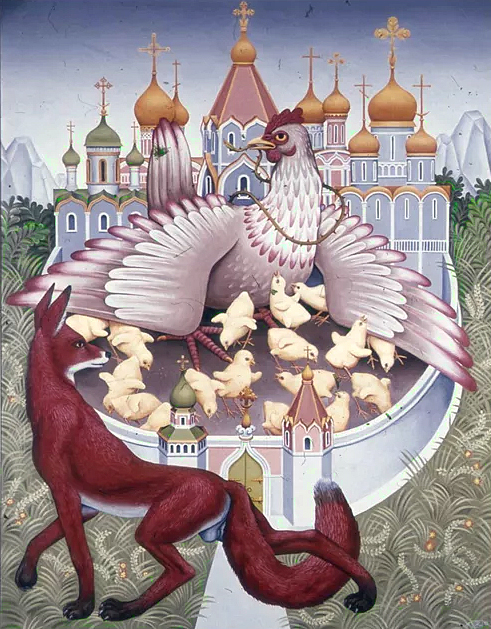
Luke 13:31-35
When I was in second and third grade, I had the kind of teacher that you never forget. Her name was Mrs. Meadows, and she was known by the entire school as the teacher with all the animals. The class pet was not a rarity in the early 2000s, although I think with each passing year there were fewer and fewer. Goldfish, rabbits, guinea pigs were common at the time, but Mrs. Meadows was not interested in ordinary class pets. She had lizards that changed color when they were hungry, and hamsters that roamed the classroom in colorful spheres, and a rainbow of fish. She brought in an orb-weaver spider one spring and proceeded to read to us every day for a month from Charlotte’s Web as we watched our own Charlotte spin intricate patterns in her enclosure by the window. Most of all, I remember the chicks. Every year, Mrs. Meadows walked her class through the miracle of life using a home-built incubator and a clutch of chicken and duck eggs. We used flashlights to check the progress of the embryos every day and drew what we saw in our notebooks. When the time came for the chicks to hatch, we learned about pipping and imprinting and listened for the tiny sounds of emerging hatchlings. After all the eggs had hatched, and all the chicks had recovered from the ordeal, Mrs. Meadows took them out and showed us that each chick would follow her wherever she went, knowing her to be their source of sustenance and protection. She taught us about the way a mother hen keeps her eggs warm even if it means going without food or water for hours or even days at a time, and how a hen will call out for her chicks at the first sign of danger, gathering them to herself and using her wings, beak, and body to fend off anything that might do them harm. Eventually, the chicks outgrew our little classroom and went back to the farm from whence their eggs had been purchased, where we learned they would grow to provide eggs and meat for the community. As the daughter of a teacher at the same school, I learned something else that my classmates did not- more than once, those chicks never made it to adulthood, because a fox had found its way into the henhouse.
When Jesus is warned that the client king Herod wants him dead, he calls the ruler a fox. Herod is a man whose power came solely from a lucky combination of lineage, wealth, and the Roman Emperor; he serves at the pleasure of Caesar and his power only extends as far as he can keep his people in line and prevent trouble for the Empire. Herod is a vain, cruel, fickle man as demonstrated by his execution of John the Baptist, a prophet who fascinated and frightened him. It would be foolish to dismiss threats of Herod’s wrath out of hand, because of course he ultimately succeeds in seeing Jesus killed. But Jesus is no fool. He has said all along that death will come for him, that he will be betrayed and killed by agents of the oppressive regime. Jesus does not deny the truth of these Pharisees’ claim, nor does he take any actions to avoid the consequences of Herod’s displeasure. Go and tell that fox for me, “Listen, I am casting out demons and performing cures today and tomorrow, and on the third day I finish my work.” Go tell Herod I’ll be right here, doing what I came here to do, and then I will go to Jerusalem. Jesus tells the fox exactly when and where to find him and then turns his attention back to the brood of wayward chicks.
“Jerusalem, Jerusalem, the city that kills the prophets and stones those who are sent to it! How often have I desired to gather your children together as a hen gathers her brood under her wings, and you were not willing.” This moment is one of several in the Gospels where we can nearly hear Jesus’s voice break as he laments, a heart full and broken by the rejection and misunderstanding of his people. Jesus offers us an image of God that is opposed in every way to the cunning, manipulative violence of the fox. If Jesus simply wished to speak to the fierce maternal love of God for humanity, he might have used any number of examples from the Old Testament- a mother bear, a mother eagle, a laboring woman, a skilled midwife. But in this moment of deep feeling, Jesus identifies himself not as a powerful predator, but as the vulnerable prey. Jesus looks at the city on the hill in the distance, that icon of all that is hopeful and all that is painful in humanity, and desires more than anything to gather her people into his arms, warm and safe from the foxes tearing the world apart.
There is much emphasis in Lent on the sinfulness of humanity and the judgment of God, and I do not believe this is a bad thing. Sin is real, and it hurts us, it is killing us, and we need to name it before we can repent, repair, and reconcile. We are the ones who have again and again silenced and killed the prophets, rejected the Spirit-filled leaders, and been unwilling to be gathered up. But I fear that we sometimes allow ourselves to become so wrapped up in the failures of humanity and the distance we feel from the righteous ideal that we forget the deep desire God has to hold us close. From the beginning when God walked in the garden, calling out for Adam and Eve, already knowing what they had done, God has reached for us even when we hide or pull away or lash out. Jesus desires to gather the children of Jerusalem, the children of God, as a hen gathers her brood under her wings. Even Herod, himself a child of the covenant, could be gathered into this warm embrace if he was willing. The unwillingness of humanity to enter God’s embrace does not prevent Jesus from opening his wings, standing vulnerable and crying out with love for us.
I will never forget the fragility of those little chicks when they first emerged from their shells, their downy feathers damp and their eyes closed, breathing heavily from the hard work of becoming new. This is how God sees each of us, so new and young in the grand scheme of the universe, so tender and endangered by the foxes that lurk among and within us. Rather than leave us to wander aimlessly further and further away from the safety of the nest, God became like us, all frail bones and awkward feathers. Wings stretched wide, chest exposed, Jesus calls out to each of us to come home, to be safe, to know once again the warmth and love we were made for. In this season of listening in the wilderness, may we heed the cry of our mother hen, and find ourselves willing to be gathered in.
 Mother A Writes