John 16:12-15
“I still have many things to say to you, but you cannot bear them now.” Right there, in red letters, the Bible tells us that God has more to teach us than what could be said in the brief time that God walked the earth in human flesh. Jesus promises the apostles that when they can no longer reach out and touch his scarred hands or hear his familiar voice reverberating around a dinner table, they will still hear from him, still learn from him. Even as the memories fade and time stretches on, there will be new revelations to receive. The ascension of Jesus to the right hand of the Father does not put an end to their journey with him. They will continue to grow in their faith, mature in their knowledge of God, and they will be able to bear the things Jesus will reveal to them. And none of this will take place in a vacuum, none of them will be left alone and comfortless. The Spirit of truth, the breath of God that breathed life into creatures of clay and moved over the waters at the beginning of creation, the fire that birthed and enlivened the church, will be with them as their guide.
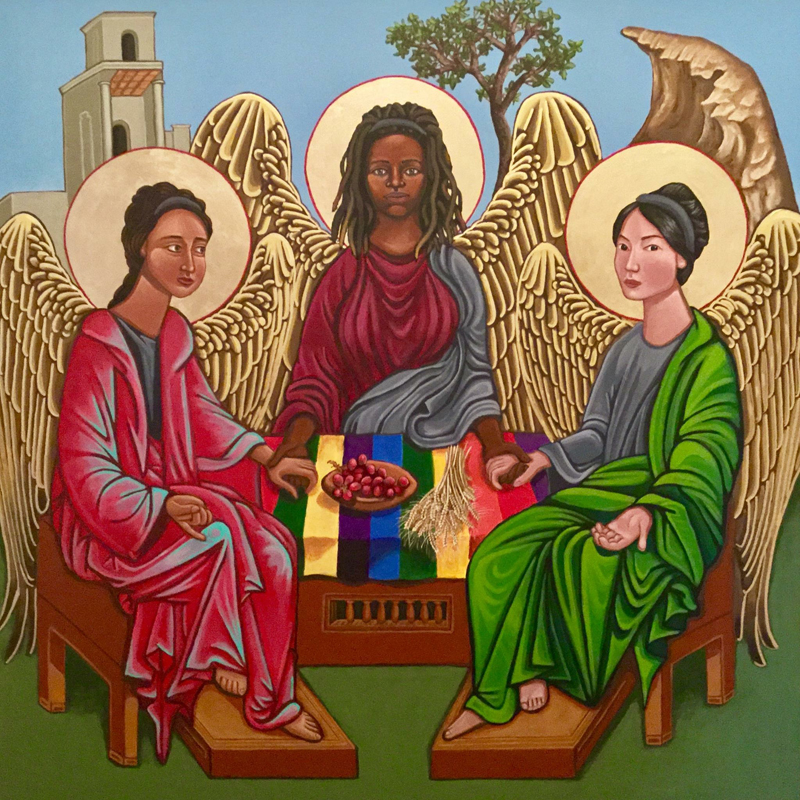
This passage from John is one of the places in Scripture where the Church sees the entire Trinity. Jesus, the Father, and the Spirit, that eternal mystery. Nowhere in the Bible is the Trinity named explicitly, it is a theological doctrine that developed over the first few centuries after Jesus’s death, resurrection, and ascension. It has required immense debate, discussion, prayer, and study to establish the doctrine of the Trinity, and even still there are great tomes written by theologians who fundamentally disagree about the appropriate language used to describe the Trinity. Part of the reason for that is the mysterious nature of the Trinity itself, a mystical reality that our limited imaginations and corporeal existence cannot fathom. Another part, I think, at least for most Episcopalians, is that we just don’t really get the Holy Spirit.
It is a temptation we all face. God the father, the creator, we can get behind. God the Son, Jesus, a man who walked the earth and lived and died and said some pretty interesting things, we can wrap our minds around at least some of the time. But an invisible, intangible, guiding presence can be a real challenge for the modern Christian. We might call that Spirit love, an abstract idea that feels familiar and nice. When we hear someone talking about the Spirit, we might imagine people on television or under tents in the heat, speaking in tongues and falling out. We might just think of ghost stories and horror films full of unseen presences that impact the physical world. When I bring up the Holy Spirit in conversation, I often notice a touch of nervousness in my conversation partners, or else a very enthusiastic Amen followed by stories of faith healing and providential intervention. The Holy Spirit shows up most prominently in our culture in the more Evangelical and Pentecostal branches of the Church, often linked to spontaneous worship, emotional outbursts, extemporaneous prayer, and perhaps a lot of clapping and stomping. For those raised in or drawn to the buttoned-up, written out, highly structured traditions of the Mainline Protestant churches, of which we are one of the oldest, such things might be uncomfortable or even frightening to encounter. But the Holy Spirit does not belong only to the tent revival and the Christian rock show. Jesus promised his disciples that the Spirit of truth would come to them to be their advocate and guide. As disciples of Jesus, that means the same Spirit comes to us and works through us here and now.
Two small groups of St Mark’s parishioners just finished reading two books about discerning the movement of the Holy Spirit within our faith communities. I had the privilege of listening in as one of the groups reflected on their first book, and I have been thinking about it all week. So much of the work we are doing in our parishes right now hinges on listening, and the book group’s conversation kept circling back to the challenge of listening for God. And it is a challenge, especially when we are so used to leaving the spiritual listening to monastics and pastors and Pentecostals. But Jesus told us that he had more to say, that we had more to learn, and that the Holy Spirit would be the one to teach us and guide us into deeper knowledge of God. So, it is a challenge, but it is worth every effort.
Just like the development of the doctrine of the Trinity took many hearts and minds over hundreds of years, listening for the Holy Spirit’s movement is a group project. It requires not only individual prayer and study, but communal prayer and study. It requires the entire community to engage in regular reading and discussion of Scripture, daily prayer about the gifts and concerns of the congregation, and honest sharing of our insights and questions. The Holy Spirit is a connecting force, a relational reality, moving through our fellowship and our communion. The Holy Spirit shows us that there is no such thing as an individual Christian, because our faith is inherently communal. We must lean in to our connections, our friendships, our family connections both found and born, our momentary fellowship with strangers and acquaintances and fellow human beings in the world, because it is there that we will hear the things that Jesus still has to tell us. And it is only together that we will be able to bear them. Lean in, and listen together. The Holy Spirit will guide us on our way.
 Mother A Writes