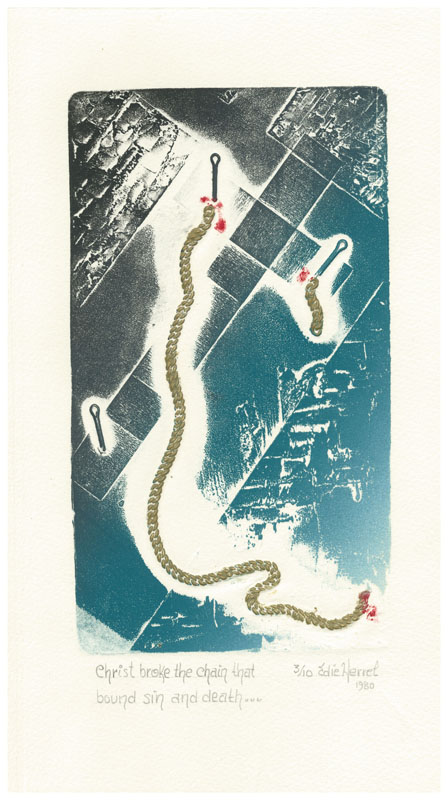
Galatians 5:1,13-25
For freedom Christ has set us free. As the red, white, and blue decorations go up and the flags wave and we prepare for our own celebration later this week, the topic of freedom is timely. This nation in which we live and whose birth we remember on the 4th of July every year understands itself as the land of the free. We are taught from a young age in this country that we have freedom of speech, freedom of religion, freedom to arm ourselves, freedom from the imposition of military presence in our homes, freedom from unreasonable searches of our private property, freedom from unjust imprisonment, freedom from rigged trials and long drawn-out judicial processes, freedom from cruel and unusual punishment, freedom from a tyrannical top-down style of government. That’s a lot of freedoms, all enumerated by a small group of men who understood these freedoms to be both self-evident and worth writing down. Most of these men also understood these freedoms to belong to men, not women; to white men of European descent, not indigenous people or those of African or Asian descent; to themselves, and not people who looked or lived differently from them. In the decades and centuries since, we have seen instances when these freedoms were revoked, or limited, or violated by the very systems meant to uphold them. This is not a political stance, or a particular theory, it is simply a fact of history. Still, this week many people in this country will celebrate and give thanks for and exercise the freedoms spelled out in the Constitution and inspired by the same values that led to the Declaration of Independence.
The freedom that is the pride of American patriots is not the same freedom that Paul is referring to in his letter to the Galatians. You may be familiar with the phrase “freedom isn’t free,” a reminder that many lives have been lost in the building and maintenance of the American way of life. There is a similar phrase coined by theologian Dietrich Bonhoeffer. Bonhoeffer devoted much of his writing to the idea of cheap grace, what he perceived as the watered-down Gospel being preached by many in his day. According to Bonhoeffer, cheap grace is faith that requires nothing of the Christian, grace without discipleship, grace without the cross. This is the same concern which Paul addresses in this section of the letter to the Galatians. The freedom the newly baptized have discovered is not to be taken lightly, or to be used as an opportunity for self-indulgence. This freedom is summed up as “love your neighbor as yourself,” Paul tells us. Being loved fully, we are free to love others the same way.
For better or more often for worse, we live in a particularly individualistic culture. Individualism is not uniquely American, but individuality is a core value of our founding documents. Life, liberty, and the pursuit of happiness exist in our cultural ethos as individual realities, defined on the individual personal level. Personal freedoms, individual liberties, even the language around our enumerated rights focus on the individual. At the level of secular law, it is what it is and perhaps it is the only way to ensure these protections exist for all people in this place. But for the Christian, this individual focus is dangerous, a path [AC1] to the kind of self-indulgence and self-destruction that Paul warns against.
For Paul, the freedom of Christ is inherently communal, inherently relational. He urges his readers to use their freedom to become servants to one another through love. The commandment to love your neighbor as yourself is the definition, for Paul, of Christian freedom. By being made free, we cease to exist individually and instead become bound to one another in love.
It is often uncomfortable to sit through the lists of bad behaviors Paul and other biblical authors condemn. Perhaps we’ve had these words weaponized against us, or perhaps they’ve hung over our heads as threats, or been laid on us like scarlet letters meant to shame us into changing our ways. Some of these things are inherent parts of human experience- strife and conflict, jealousy, anger, envy. Some are impossible to define outside of the social norms of a particular time and place- fornication, impurity, licentiousness. Some might even inspire self-deprecating jokes- sorcery, drunkenness, carousing. But despite Paul’s reputation as a particularly prudish and judgmental Biblical author, there is something very important all of these “works of the flesh” have in common.
Fornication, impurity, licentiousness, idolatry, sorcery, enmities, strife, jealousy, anger, quarrels, dissensions, factions, envy, drunkenness, carousing- these are all red flags signaling an individualistic worldview. These are all things Paul’s audience are technically free to do, both socially and legally in the Gentile province under Roman rule. Technically, with a few restrictions related to age and public safety, we are free to do all these things too. But the thread that runs through them, the thing Paul is trying so hard to help his audience avoid, is the breakdown of community. Engaging thoughtlessly or carelessly in physical relationships, treating people as objects, can lead to heartbreak and misunderstanding and even abuse. Embracing the idolatrous practices of the Roman or any state religion can cause confusion about who our ultimate authority is and what we can and can’t control. Anyone who has ever loved an addict can confirm the harm that can be done when substance use and abuse take the place of community and loving relationships. Harboring envy and jealousy and anger can rot the ties that bind us to one another and lead us to lash out and hurt even those we love most. Factiousness and enmity and quarrelling and dissent within a community can lead to fractures of relationship that take a lifetime or more to repair, if they ever do.
By contrast, look at the fruits of the Spirit. Love, joy, peace, patience, kindness, generosity, faithfulness, gentleness, self-control. What do any of these things mean in a world focused on the individual? Whenever Jesus spoke of love, he spoke of love in relationships- love between humanity and God, love between neighbors, even love between enemies. Even self-love is spoken of in relation to others- as you love yourself, so too you love your neighbor. In moments of great joy, the human instinct is to gather, to tell someone, to show someone, to throw a party. Patience and kindness and generosity and gentleness are exercised in relationship, giving and taking and sharing. When we speak of peace, we mean the end of conflict between individuals and groups, the end of violence and also the end of that factiousness and enmity and quarrelling that breaks communities and begets further conflict. What would be the point of self-control, if only the self mattered? The fruits of the spirit are the gifts of community, the practices that maintain and grow relationship. It is for this kind of community that we are freed, and it is through these relationships that we come to understand our freedom.
Stand firm, therefore, and do not submit again to a yoke of slavery, for you were called to freedom, brothers and sisters. You were called to love, joy, peace, patience, kindness, generosity, faithfulness, gentleness, self-control. You were called to love your neighbor as yourself, and it is through the loving that you exercise true freedom. Dietrich Bonhoeffer called this “costly grace, the gospel which must be sought again and again, the gift which must be asked for, the door at which [we] must knock.” Freedom isn’t free, and grace isn’t cheap. Our freedom demands something of us, and through the Spirit we know that the greatest demand of the Christian life is to love.
 Mother A Writes