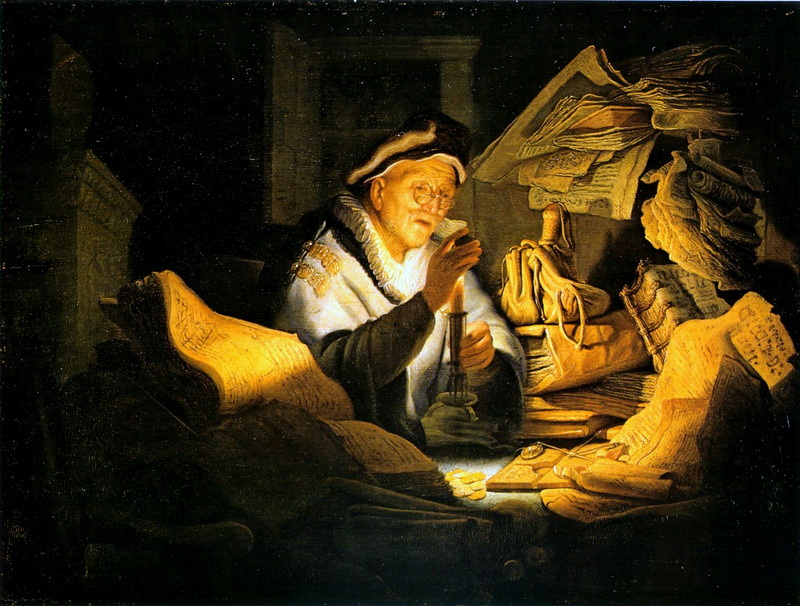
Luke 12:13-21
Robin Wall Kimmerer, indigenous botanist and author of Braiding Sweetgrass, recounts several traditional stories of her people that have been used for generations to teach important lessons and pass on cultural values. Many of the stories feature Nanabozho, the teacher in the Anishinaabe cosmology, as a central figure whose choices illustrate lessons about accountability, sustainability, relationship, and stewardship. One such story comes to mind as we ponder Jesus’s parable of the man who stores up much grain, and I’d like to share it with you in Dr. Kimmerer’s words.
“Nanabozho was fishing in the lake for supper, as he often did, with hook and line. Heron came striding along through the reeds on his long, bent legs, his beak like a spear. Heron is a good fisherman and a sharing friend, so he told Nanabozho about a new way to fish that would make his life much easier. Heron cautioned him to be careful not to take too many fish, but Nanabozho was already thinking of a feast. He went out early the next day and soon had a whole basketful of fish, so heavy he could barely carry it and far more than he could eat. So he cleaned all those fish and set them out to dry on the racks outside his lodge. The next day, with his belly still full, he went back to the lake and again did what Heron had showed him. “Aah,” he thought as he carried home the fish, “I will have plenty to eat this winter.” Day after day he stuffed himself and, as the lake grew empty, his drying racks grew full, sending out a delicious smell into the forest where Fox was licking his lips. Again he went to the lake, so proud of himself. But that day his nets came up empty and Heron looked down on him as he flew over the lake with a critical eye. When Nanabozho got home to his lodge, he learned a key rule—never take more than you need. The racks of fish were toppled in the dirt and every bite was gone.”1
Dr. Kimmerer receives this lesson as a cautionary tale against the overconsumption that plagues our culture and poisons our earth, and I trust her interpretation. But as I read parable of Jesus, and hold it up beside the teaching of Nanabozho, I cannot help but see another layer of both stories. The rich man’s land produced abundantly, as the lake produced abundantly for Nanabozho. Both men saw in this abundance an opportunity, and rushed to find ways to store and preserve the bounty. In both cases, I think we can look with compassion on their impulse. Surviving the barren season of winter has shaped the choices of humans and other animals throughout the world for all of human history and beyond. Still today, we worry about saving money and resources for the lean times, and all of us here benefit greatly from the wisdom and generosity of those, both here and gone to glory, who have contributed to endowments for the financial stability of the parish. It is not inherently wrong to want to store up grain and fish and goods and dollars to protect ourselves from the unknown future.
This is, I think, the place where we can see the story of Nanabozho as a helpful teaching to deepen our understanding of Jesus’s parable. The rich man’s motives are not clear, and the parable does not expound on the consequences of his stewardship. All we know is that he intends to lead a life of luxury, and that life is cut short by a God who calls him foolish. We do not hear of his family, or of the laborers who tended and harvested the grain, or the laborers who will build his new larger barns, or the creatures who might be impacted by this process. The Anishinaabe story gives us a little more depth.
In the process of fishing, Nanabozho forgets to consider the consequences of his stewardship on his neighbors. The lake becomes depleted of fish, impacted the aquatic ecosystem in countless ways. The heron who taught him to fish more effectively watches as his own food source dwindles, and the next generation of fish may be significantly reduced by the man’s overfishing. By taking more than he needs, he is also taking away the means of survival for his neighbors. Nanabozho’s belly is full, and just as the rich man in the parable intends to relax, eat, drink, and be merry, so too Nanabozho looks forward to staying home and enjoying his bounty.
Without the teaching of Nanabozho and the heron and the fox, we might look at the rich man’s story in isolation, as one man and his right to enjoy his accomplishments. We might see God’s role in the parable as one of spiteful smiting, a waste of resources and an unfair punishment for a landowner who simply wanted to enjoy the fruits of his labor.
But we must consider the fox and the heron, and the unnamed countless created beings whose bellies are empty so that Nanabozho’s might remain full. We must consider again the laborers and possibly also enslaved and indentured people who tilled the fields, sowed the seed, took in and processed the harvest, and built and maintained the barns. We must consider the animals who pulled the plow and hauled the harvest to the threshing floor. We must remember the corners and edges, the parts of the harvest that Jewish believers were obligated by Torah to leave unharvested so that widows, orphans, and other poor and vulnerable neighbors could glean enough for their own daily bread. How do any of these beloved children of God benefit from the rich man storing up the grain they helped to produce?
This parable is challenging to our American capitalist individualism. A man owns a field; he should literally reap the benefits. A person owns a second house; they deserve to receive payment from the people who live in it. A person works hard, invests wisely; they deserve a comfortable life and a leisurely retirement. Someone teaches a man how to fish; that man deserves to catch fish and do with them what he wills.
But the kingdom of God expects, demands, a different approach. Kingdom values are not about the individual, but about the collective, the communion, the body of Christ. Kingdom values ask not “what do I need?” but rather “what do we need?” and Kingdom values teach us that that “we” is bigger than our household, our family, even our parish. From Nanabozho, we learn that the “we” is even bigger than our species.
What would the parable look like if the rich man had kingdom values instead of worldly ones? For a start, perhaps he would not be a rich man at all, so generous is he with the abundance of his resources. Perhaps instead of building bigger barns, he might give a bigger portion to each of the people who harvested the grain. Perhaps instead of storing up goods and grain for many years, he might eat, drink, and be merry with his neighbors here and now, sharing his harvest and his table. Perhaps instead of seeking always to keep his own belly full, he and Nanabozho might both fill the empty bellies around them. Perhaps, if the rich man had kingdom values, he wouldn’t need bigger barns but a longer table, a bigger doorway to welcome the hungry and the lonely to the feast. Then, when his life is demanded of him, the man will recognize heaven, because it looks so much like his life on earth.
- Kimmerer, Robin Wall. “Braiding Sweetgrass”, pg 179. ↩︎
 Mother A Writes