Luke 12:49-56
A friend of mine recently sent around a picture of the front cover of her parish bulletin for today in a group message with other clergy. The graphic that her parish administrator had chosen for the front cover was a world on fire, the earth as seen from space but partially engulfed in flames. It was as if someone had plugged the first sentence of today’s Gospel passage into Google and picked the first image that came up, maybe a borrowed image from a campaign to end global warming. We all chuckled, agreed that it was a bit on the nose but compelling enough to leave in. I still laughed at the thought of that bulletin cover when I was writing this sermon. But something strikes me about that image as I reflect on it in light of today’s Gospel message, something I doubt the ClipArt catalogue had in mind. The computer-generated image depicted the earth surrounded by flame- but the earth itself was not burning. The seas were the same deep blue, the clouds swirling over them instead of being vaporized. The continents that were visible boasted the rich greens of forests and the sandy browns of the desert and the icy silver of the tundra. Like the burning bush that Moses witnessed in the book of Exodus, the Earth was blazing, yet it was not consumed.
When I was very small, a group of firefighters came to my preschool and taught us all about fire safety. We learned what a fire extinguisher was, how to know if there was fire on the other side of a door by carefully checking the temperature of the doorknob with the back of a hand. They taught us Stop, Drop, and Roll and how to crawl along the floor to avoid the smoke and heat that rise. We were told to go home and talk to our parents about a safety plan- if there was a fire while we were asleep, how should we get out of the house and where should we go to be safe until our parents could come find us? I dutifully sat my parents down and asked them the prescribed questions, and we recharged the kitchen fire extinguisher and bought an emergency ladder to keep in my bedroom, since my room did not have any windows facing the porch roof. I went to bed every night for several weeks convinced that I would lose my family in a fire, try as my parents might to assuage my fears. Even into my teens and even now, I am very attentive to candles and the disposal of matches and I always know where the fire exits are. I, like many or even most of us, was taught that fire is dangerous, destructive, deadly. Fire is something to respect and to fear, lest we be consumed by it.
But when I got to college, I learned to see fire in a new way. My alma mater is very close to a beautiful National Recreation Area called Land Between the Lakes, aptly named for the series of islands and peninsulas between Kentucky Lake and Lake Barkley. Driving through Land Between the Lakes, or LBL as the locals know it, you pass signs warning of closed entrances to areas of the park at different times of year for prescribed burns. In the early spring, the Forest Service sets fire to large sections of land throughout the park to thin out understory plants, reduce dry brush that could lead to more serious and difficult to control fires, and to recycle nutrients back into the soil.1 The smell of a forest on fire quickly becomes a familiar one in that part of Kentucky, and still today the smell of smoke reminds me of college. My friends who studied wildlife biology and environmental conservation taught me that the burns are actually to prevent wildfires, a protective measure that removes the dry brush and fallen leaves that can allow the smoldering remains of a campfire to build into a raging wall of flame. It also gives beneficial native plants a fighting chance against invasive nonnative species, eliminating understory growth that threatens to choke out the entire ecosystem. The methodical burning of one section at a time by the Foresters allowed wildlife to retreat to safety and return to the area quickly, bringing with them seeds and pollen from other parts of the forest. The indigenous tribes, the original stewards of the land, understood the importance of this cycle and were the first to manage the land in this way. In many parts of the country, this ancient practice is being reintroduced to limit the destruction of wildfires, but practitioners often face resistance.2 We have been taught that fire is destructive. We are in the process of relearning that fire can be creative too.
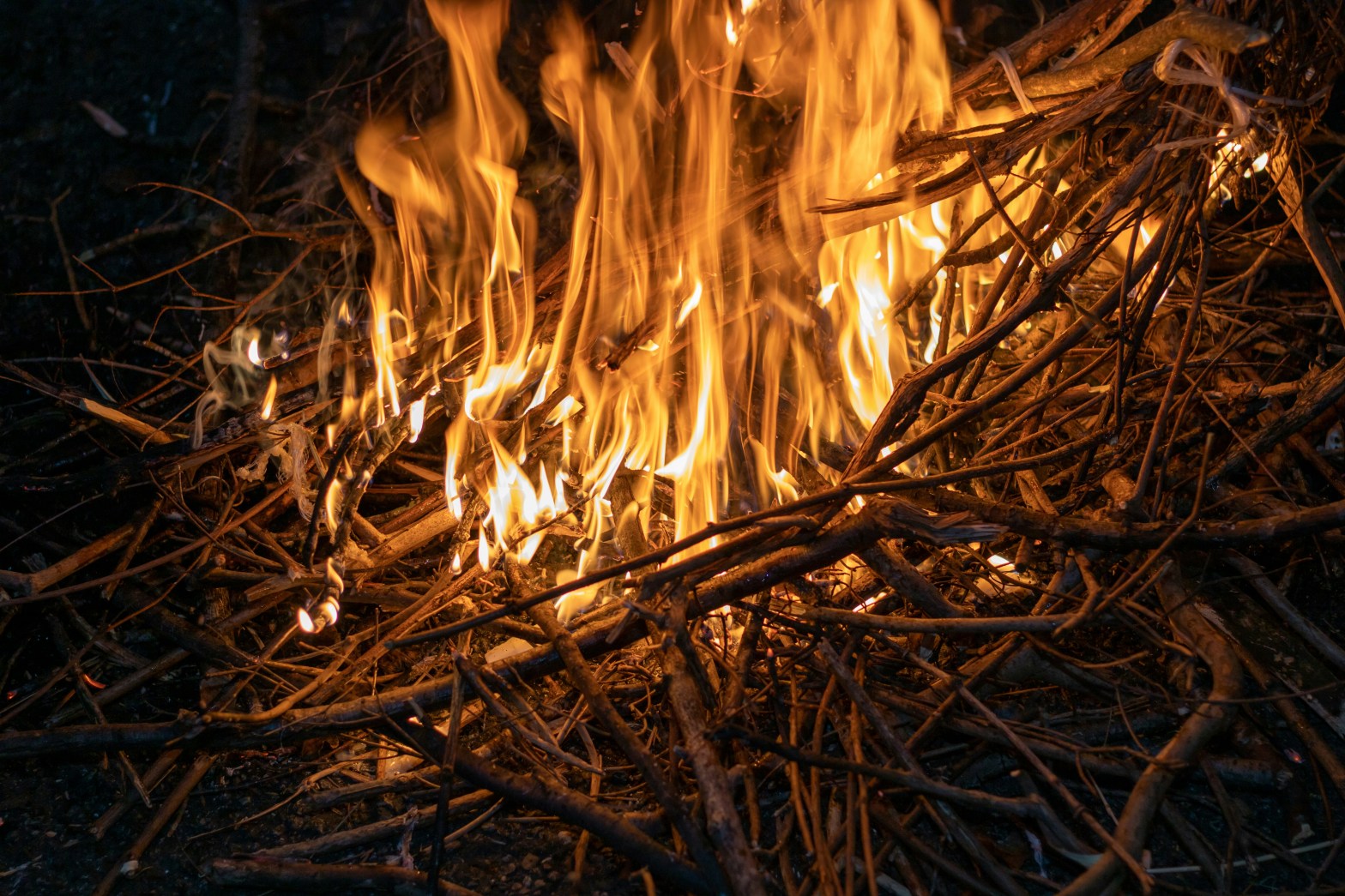
The kind of fire that Jesus came to bring to the earth is the kind that blazes but doesn’t consume. It is the kind of fire that destroys in order to create, that burns up what is dead to make room for what is truly alive. Jesus recognizes that the fire he brings will scare people, that the smell of smoke will lead to suspicion, conflict, and division. He understands that there will be those who wish to put the fire out simply because it is a fire, with no regard for who set it or why. He understands that his own flame will be forcibly extinguished, at least for a moment. The fire that Jesus brings is not the brimstone of Dante’s hell; it is the flame of the burning bush, a beacon that lights the path to freedom. It is dangerous; yes. All fire is. But it is not a weapon our God wields against us. It is a tool that clears the way to new life.
What parts of ourselves, of our communities, of our culture, are dry brush poised to feed a roaring wildfire? What habits and systems and idols are one errant spark away from consuming us? What is growing up beneath the surface, draining our resources and slowing our growth toward heaven? Our systems enable injustice and fuel oppression. Our culture of greed chokes out the good earth we are meant to steward. The suspicion and fear we are taught to hold toward the stranger, the homeless and unhoused, the newcomer and the person suffering addiction, it is all dry brush feeding a wildfire that is rushing to consume the vulnerable in our midst. We need Jesus to help us manage our own landscape, to burn away the fear and the greed and the suspicion. We need Jesus to help us remove the invading hatred so that love can have a fighting chance. Jesus has come to bring fire to us, and the change the blaze brings can be scary. But there will be new growth from the ashes, new possibilities revealed that could never have grown in our overcrowded lives. Allow the fire of Jesus to recreate you. It is already kindled, and we will not be consumed.
 Mother A Writes