John 1:29-42
Tomorrow, our nation remembers the Reverend Doctor Martin Luther King, Jr. His work in the civil rights movement, as well as his dedication to nonviolent direct action, are lauded today by the majority of the people in this country today. But it has not always been this way. At the time of his martyrdom in 1968, Martin Luther King Jr was not a popular man. In 1963, just 5 years before his death, he was viewed favorably by 41% of Americans.1 By the time of his death, even as the Civil Rights Movement itself gained ground and began to be viewed favorably by a growing minority of white Americans, Dr King’s unfavorables were in the 60s. This is AFTER the “I have a dream” speech. This is AFTER he had been arrested multiple times for demanding equal treatment in segregated businesses. This is AFTER he was awarded the Nobel Peace Prize. 63% of Americans did not like him. 44% of Americans REALLY did not like him. The more Dr King became known to white America, the more white America disliked him. Today, 94% of Americans are favorable toward Martin Luther King Jr, a man that during his lifetime was the target of hatred and vitriol and racially motivated violence including the violence that led to his death. And the whole time, regardless of how anyone felt about it, Dr King continued his work, as his faith compelled him to do. Dr King preached the Love of Jesus and the freedom that Love makes possible, and he was hated for it.
There is a lot of talk in the church these days about prophets. During the listening sessions at the beginning of our bishop search process, the word “prophetic” came up multiple times. Bishops and priests and deacons and lay leaders who speak truth to power are called prophetic by those who agree with them and accused of being too political by those who do not. Prophetic preaching seems at times to refer to anything spoken from a pulpit or a megaphone that might anger the people we view as our enemies. In this way, I wonder if it is even really possible for a prophetic preacher to become a bishop in most places, or if they can really only exercise a prophetic ministry after they have the privilege and relative safety of crozier, mitre, and ring. I don’t recall ever seeing any preachers, bishop or otherwise, dressed in camel hair and living exclusively off of foraged food, that’s for sure.
It is a generally accepted fact Martin Luther King’s work was prophetic, although opinions differ on whether he himself was a prophet. His most famous speeches leaned heavily on the prophets of the Old Testament. His dream looked a lot like the peaceable kingdom of the Biblical prophets, and the ways he spoke and organized were reminiscent of the Beatitudes. He read his Bible deeply and studied theologians and poets and he kept speaking even as the White Church failed him and his people over and over again. And the more he spoke, the more people heard from him and saw him, the more the majority of the country disliked him. He was an agitator, an outsider who showed up in communities and caused trouble. He spoke too loudly and he expressed his anger and grief too openly. He made people uncomfortable, even angry. But I don’t believe that is what made him a prophet of his time.
More so than division or politics or public opinion, the mark of a prophet is pointing. The prophets of old pointed to the places where the people of God were falling short and harming themselves and one another. They pointed to the future, to the inevitable outcomes of bad habits and the equally inevitable joys of turning back toward God. The prophets pointed to God, then back to the people, begging them to look, to see, to move toward the God who cherished them. The prophets were always pointing, but never at themselves. With their words and with their actions, they pointed toward God, toward salvation, toward hope from the only place true hope can be found. And the ones we remember, the people we call prophets, are the ones who pointed even when it made them unlikeable, unpopular, even when it put them in danger.
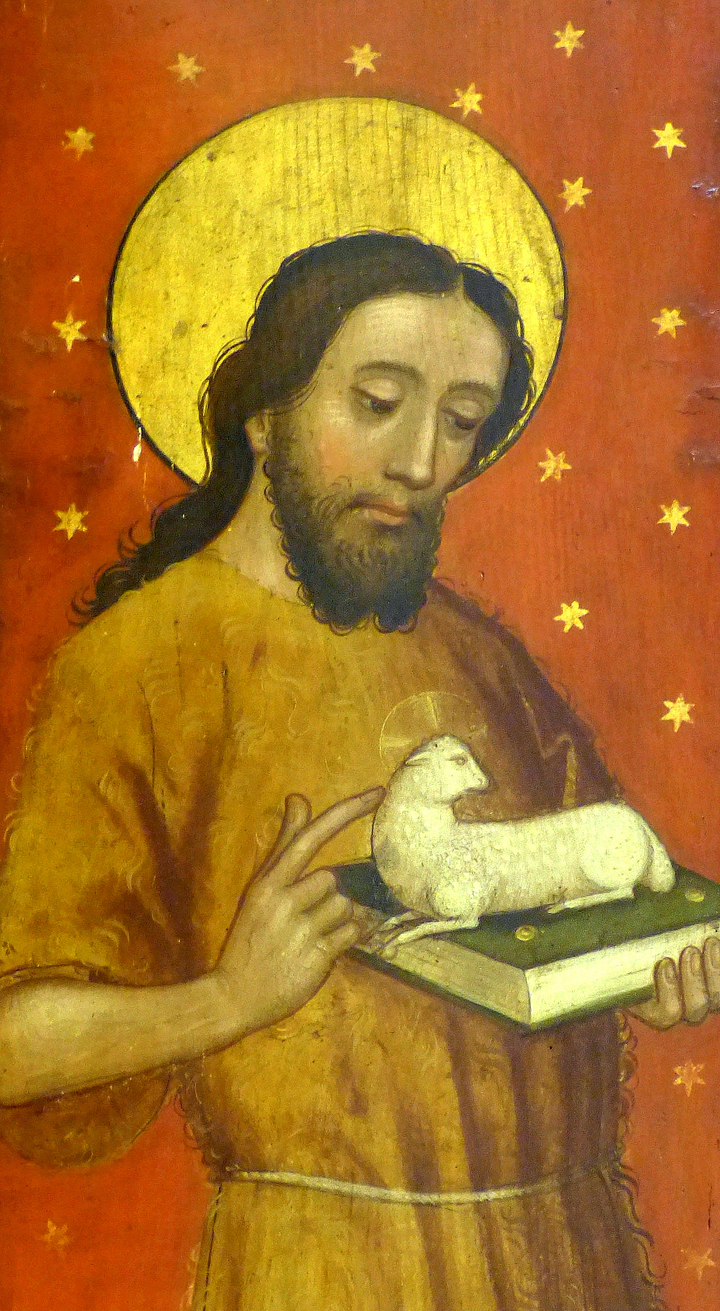
This is maybe one of the most amazing and even shocking things about John the Baptizer’s ministry. He was a talented preacher, and clearly people were drawn to him. He was a faithful man, willing to leave everything behind to follow God. He was well-versed in the Scriptures, the son of a priest and a prophet. People flocked to him from all over, and some left behind their lives to become his disciples. He had all the makings of a movement, and he very easily could have become a cult leader, amassing followers and living off of their labor and attention. But at the first sighting of Jesus after his baptism, John points. He points to Jesus, and his own disciples leave him to follow this newcomer.
Can you imagine that? Can you imagine a leader that would rejoice in their people leaving them behind to follow someone else? Working among churches, I have seen how competitive some leaders and especially pastors can be, how fearful and covetous we can get about the thought of our sheep finding community in another flock. But John understands that they are not his sheep in the first place. John understands that there is and always has been only one shepherd, and that his entire purpose was to clear the path for the flock. John points to Jesus with his words, with his life, and literally with his hand, because that is what a true prophet does.
John’s ability to be prophetic flowed from his understanding that the kingdom of heaven was coming near and that there was and is and will be only one true King. Dr King was, by the same definition, a prophet, a person of faith who points always toward Jesus as the source and object of our hope. He was not beloved for it during his short life, and now over 94% of Americans view him favorably. John was beheaded, but today we honor him as a prophet and a saint and a hero of the faith. The prophets of our day are still revealing themselves, and in many cases we may only be able to recognize them in retrospect. But if we look at where they are pointing, we will have better luck discerning the true from the false prophets. The people who only ever point toward themselves, or toward the powers of this world, are not standing in the unbroken line of prophets, whatever they may claim. It is those people who point to Jesus, those who would gladly see everyone follow behind him even if it meant giving up their own power, who are truly prophetic. This kind of prophetic witness is always divisive, it is always political, it is always challenging even to the most faithful among us. It does not exclusively show up at protests, or in public hearings, or on the steps of monuments, or even in pulpits. It does not always comfort us, and it rarely fits in a slogan on a T shirt. We don’t always know it when we see it, at least not at first. But when we are evaluating the people we have trusted to lead us, whether it’s our rector or our bishop or our elected officials or our mentors or our vestry, we must look at where they are pointing us. Is it toward Jesus? Is it toward the Son of God, the Prince of Peace, the God of John and Andrew and Simon Peter and Martin Luther King?
If they are not, if they are pointing anywhere else except toward the God of Love, then their witness is false and their testimony serves only to lead us further from the truth. Look for the ones who point toward Jesus. And then follow Jesus. The true prophets will joyfully fall in line behind you.
- This and all following stats can be found here: https://www.pewresearch.org/short-reads/2023/08/10/how-public-attitudes-toward-martin-luther-king-jr-have-changed-since-the-1960s/ ↩︎
 Mother A Writes