Joel 2:1-2,12-17
This world will break your heart if you let it.
There is so much to grieve, so much to fear, so much to run from. Most of us, most of the time, are numb to some or all of it. Sometimes, the numbness is the only way to keep going, to keep from crumbling or falling apart. The temptation to harden our hearts, to let them calcify and turn to unfeeling, unbreakable stone can be irresistible. It seems that the softhearted, the deep feeling, and the people who refuse to be numb are the ones who suffer most, and the hardhearted laugh them to scorn. The ones who weep, the ones who shout, the ones who beg for change are treated with disdain, disgust, or at least distrust. To feel is treated as a weakness, when in reality it is a threat and a deeper truth.
Our holy scriptures do not place logic on a pedestal like our culture does. Our liturgies do not assume our rational minds are the only part of us of any value. The rhythms of the church year and the lectionary insist that change is possible, natural, necessary, and that our emotions are an important driver of that change. Our faith accepts what our culture will not- God feels, and so must we.
I have noticed something over the last ten years that I have worked in churches. Everyone knows that there are people who only attend worship in churches on Christmas and Easter, maybe Mother’s Day and the occasional baptism too. But I have noticed that there are two other, less obvious days that I consistently see the faces of those who might not otherwise choose to be in a pew. Good Friday, when we remember the death of our savior. And Ash Wednesday, when we remember our own mortality and the veil through which we will all someday pass.
Good Friday is a liturgy like no other. It begins and ends in a penetrating silence. It is sometimes disorienting in its brevity, and stark in its austerity. We retell the horror story of a betrayal amongst friends, a found family torn apart by a single decision. We remember the blood and the sweat and the tears, and the overwhelming loneliness. We sense the moment of abandonment, and for a moment we too are forsaken. It is a day of grief, and deep pain, and heartbreak. More often than not, the people who seek out this liturgy in particular spend the entire hour quietly crying. I know, because I have held many of their hands over the years.
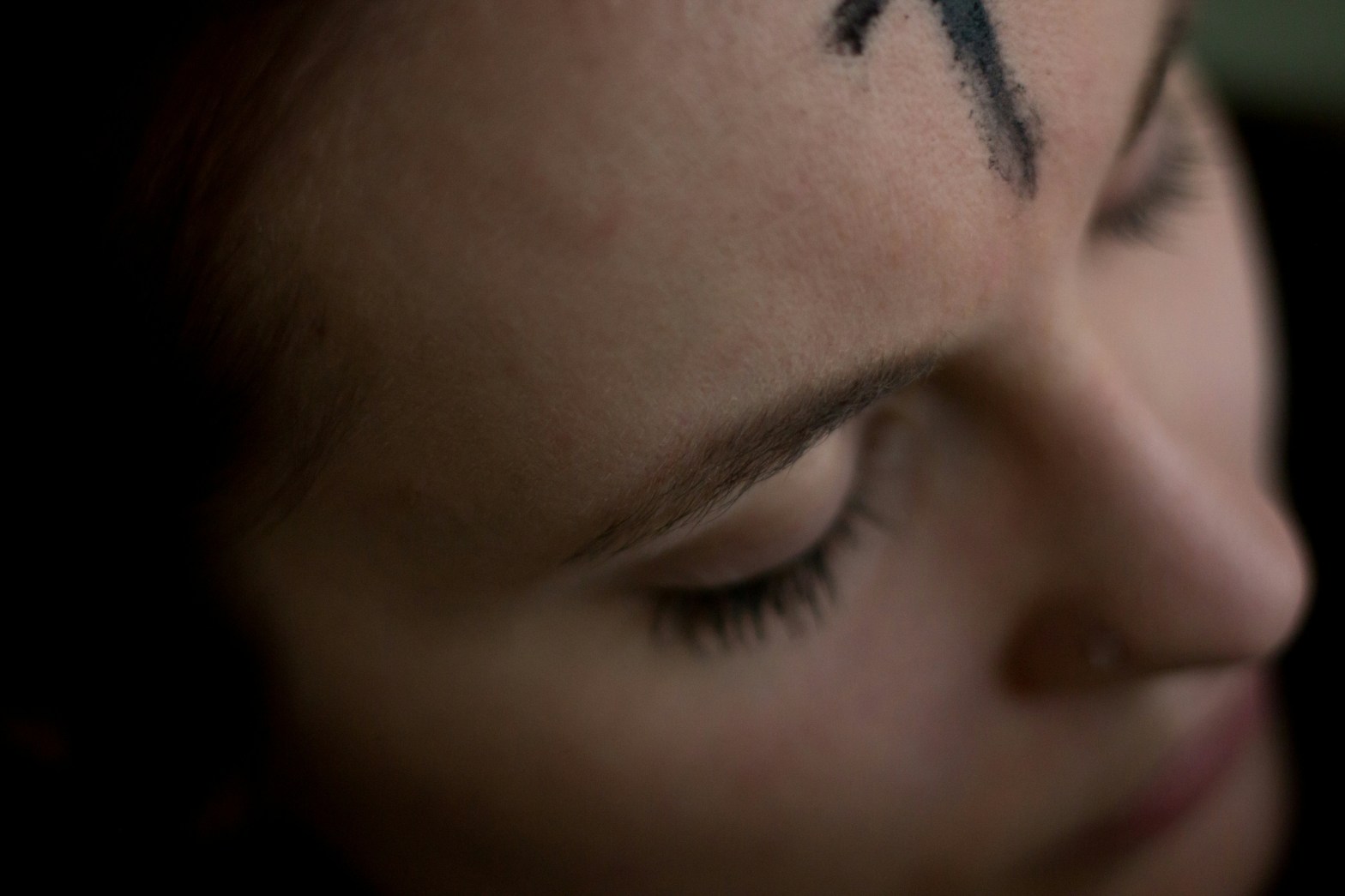
And then there is this day. Ash Wednesday, the first day of a long season of self-examination, repentance, prayer, fasting, self-denial, and scripture study. A day that shoves in our faces the inevitability of our own demise, and then asks us to go out and be a walking billboard advertising mortality to every person we meet. It is a stunning, bizarre ritual that makes less and less sense to the rest of the world with every passing year. We are living longer, and looking younger, than we ever have before. There is a multibillion dollar industry built entirely on convincing us that our death can be delayed indefinitely with the perfect “wellness” practices, the right vitamins, the right number on the scale or in the tag of our clothing. In day to day life, it is seen as morbid, even obscene, to discuss death and dying openly. But still, when so many people have been given so many reasons to distrust or turn away from the church, some of those same people find themselves in the back pew of an Ash Wednesday service somewhere in the world. They may not identify as a Christian, they may not even be able to explain why this is what they’re spending precious time on today, but they’re here. You’re here. Why?
In the ancient world, and in many cultures around the world to this day, grief is loud. There is wailing, and crying, and keening. Women beat their breasts and men scream. People rip their clothing down the center, as if the shrapnel of their broken heart cannot be contained by their ribcage or the fabric covering it any longer. I have been in the hospital hallways and funeral home parking lots and streetcorner vigils. I have witnessed the moments when grief explodes, shredding in its wake every social nicety or “civilized” norm. I have felt it in my own body. It is exhausting, and physically painful, and impossible to forget.
Today, and all along the morbid march through Lent to Good Friday, we are given permission to grieve loudly, even in this relatively quiet liturgy. The Lord says to us, “rend your hearts and not your garments.” Put another way, “Let the world break your heart.”
When God formed us in God’s image, God did not place hearts of stone in our chests. The same God who is gracious and merciful, slow to anger and abounding in steadfast love, chose to make our hearts fragile, breakable, soft. God whose heart breaks at the things we do to one another, the ways we hurt one another and ourselves, gave us hearts that could break like God’s. God gave us the ability to grieve, so that we would never confuse hardness with strength. God made us from dust, and because of that we know what it is to fall apart.
If you do nothing else in the next forty days, even if you don’t attend a worship service again until the next Ash Wednesday, I hope you will accept God’s invitation. Rend your hearts. Let your heart break, and do the slow work of repair. Refuse to allow your heart to harden or your senses to dull or your mind to become numb. After the ashes have been washed away, let the absence of them remind you that there is something more true than death. This world will break your heart. Let it.
 Mother A Writes