John 3:1-17
Since Ben and I moved to Virginia, there has been at least one exceptional meteorological or astronomical event per year visible from this area. The aurora borealis, the northern lights, have shown themselves multiple times. There has been a near total solar eclipse, which I remember particularly well because I was blessing completed prayer shawls at Grace when it began. Multiple planetary parades, when four or more planets are visible to the naked eye at the same time, have happened in the last four years. And last fall, a friend of mine asked me to join her in viewing the Perseid meteor shower, when the human eye can see up to 100 shooting stars per hour. In most of these cases, we needed to get as far away from city lights as possible in order to fully see what was happening in the sky. In the case of the eclipse, we had to wear nearly opaque safety glasses that allowed us to safely look at the sun, because even a sliver of its light could cause permanent damage without proper equipment. With the eclipse glasses on, we couldn’t see anything except when staring directly at the brightest light in the solar system. Everything else was darkness. In every case, we needed to go deep into darkness in order to see clearly what the light was up to.
Much has been made of the fact that Nicodemus, a well-known Pharisee and leader in his community, came to Jesus by night. There are sermons and scholarly writings pondering his fear, his risk aversion, his shame. Did he fear what Jesus might say to him, or did he fear what others would say about him if they learned he was speaking with this controversial teacher? Some view Nicodemus as a coward, or a fence-sitter. Some read him as unable to commit to discipleship with Jesus, unwilling to risk the social, economic, and spiritual consequences of this new movement within his religion and culture. In the show The Chosen, an artistic interpretation of the Gospel narrative, Nicodemus is depicted as wealthy and entrenched in power. His spouse scoffs whenever he says anything that might indicate a minority opinion or a new understanding. His colleagues in the Sanhedrin look askance at him for showing interest in Jesus’s teachings. He is filled with fear and with wonder, and it is only under the cover of darkness that he is able to fully embrace Jesus.
One thing that makes Nicodemus different from others who question Jesus is that we see him again. Many of the unnamed people who come to Jesus for answers or to attempt to trap him in theological puzzles are never mentioned again in scripture. But Nicodemus is remembered by name, and he returns to confess his faith in Jesus, placing himself in danger in the process. After the night visit, which we overhear today, Nicodemus reappears several chapters later when the temple authorities are trying to arrest Jesus. He intervenes, asking “Our law does not judge people without first giving them a hearing to find out what they are doing, does it?” He is met with scorn, but the police are not sent after Jesus to arrest him this time, perhaps in part because of the intervention of a leader of the Jews.
After Jesus’s ultimate arrest and execution, it is Nicodemus who returns once again to accompany Joseph of Arimathea as they retrieve the body of Jesus and place it in a tomb. Nicodemus brings a large quantity of burial spices and together with Joseph they wrap the body of Jesus in funeral linens and the fragrant spices. After the indignity of his arrest and crucifixion, Nicodemus and Joseph provide Jesus a dignified burial. This is women’s work that these two secret disciples undertake in full view of the authorities while the twelve are hiding behind locked doors in upper rooms. When there is seemingly no more to be gained from a connection to Jesus of Nazareth, and everything to lose, it is these two; the man who came to Jesus by night and the man who followed Jesus in secret for fear of what others might think- it is these two men who do what Peter could not. They claim Jesus, they do not deny him. The depth of their faith has been remembered alongside their hesitancy and fear, and it is in these moments of imperfect servanthood that we see what Jesus was trying to teach Nicodemus that first night.
Some of the skepticism toward the faith of Nicodemus comes from our assumption that the night is a time for misbehavior. We associate darkness with evil, shadows with danger or deception, privacy with secrecy. If Nicodemus believes that Jesus is a teacher who has come from God, why not come out and say it publicly? Why seek him out in private, when so much of Jesus’s ministry is happening in the sight of all?
Sometimes, the light is only visible in the darkest hour.
Sometimes, the truth can only be revealed when all the noise has ceased.
Sometimes, the dark night of the soul is the site of dazzling revelation.
What Jesus offers to Nicodemus is a lesson containing one of the most oft quoted verses in all of scripture. John 3:16, “For God so loved the world that he gave his only Son, so that everyone who believes in him may not perish but have eternal life.” That most beloved of promises, the Gospel in a nutshell. And just as important, if less often remembered, is the line that follows it. “Indeed, God did not send the Son into the world to condemn the world, but in order that the world might be saved through him.” This incredible, faith-defining declaration is made in the middle of the night during a private conversation with a man who is not yet ready to claim his discipleship. In the darkness, a light shines, and perhaps it is only in that dark, quiet place that its full power can be seen and heard and felt.
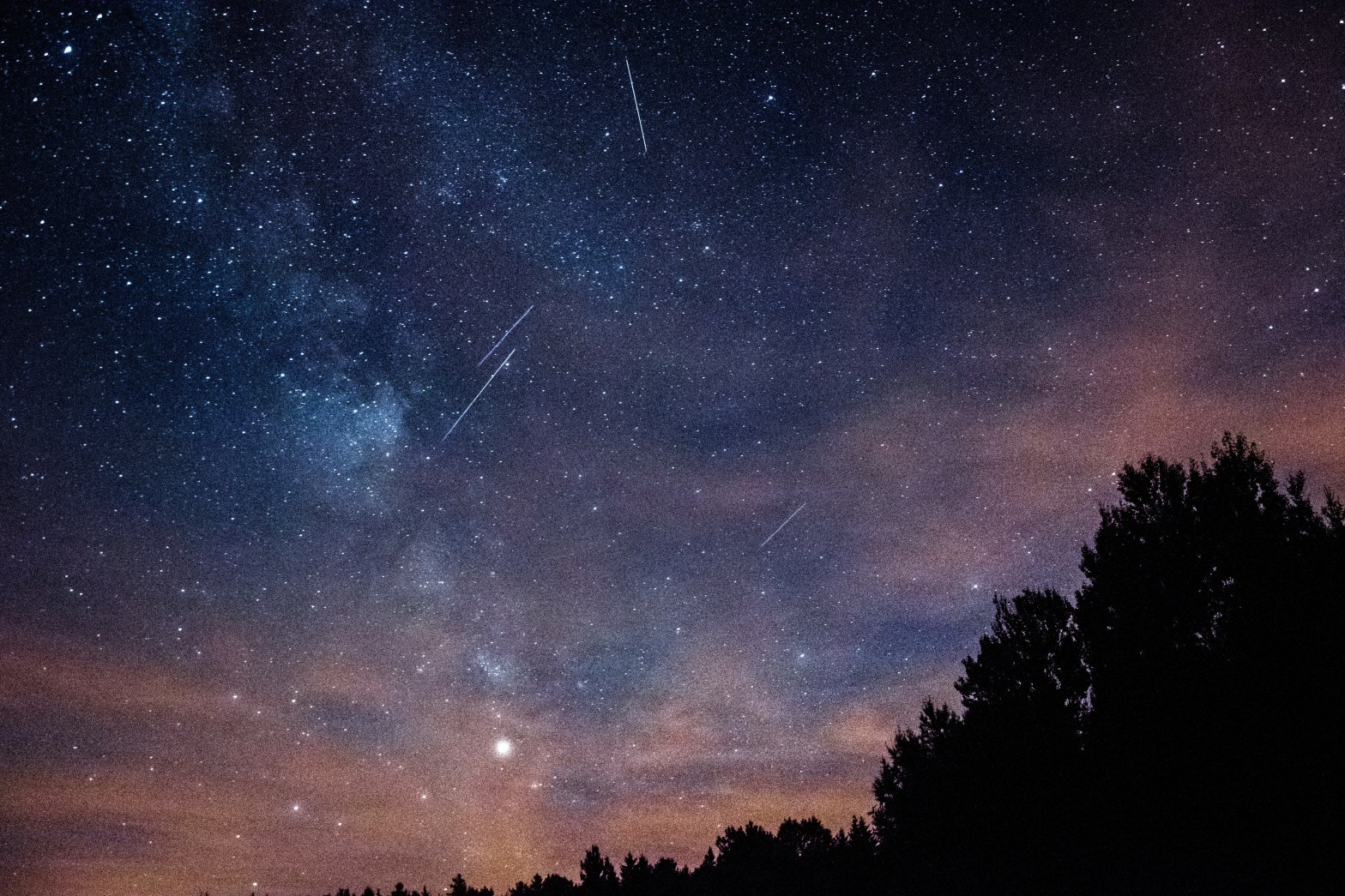
When you are too close to the lights of cities or the glow of suburban streetlights or the bright LED headlights of passing cars, you may still see a few stars, maybe a planet or two. But when you go a little further into the wilderness, into the deeper darkness, the galaxy itself greets you. The moment before your eyes adjust, before your pupils expand, you can see further into time and space than your brain can fathom, taking in light from stars that ceased to exist before the foundations of the earth were laid. For a moment, watching tiny flecks of light streaking across the sky, perhaps you can believe it is possible to be born from above, born again with this world that God so loves.
This Lenten season is a time to retreat a bit from the noise and the bright artificiality of the world and go in search of the deeper darkness. Lent is long, but the glory of these forty days is that we have time to do a little spiritual stargazing. Perhaps we might follow in Nicodemus’s footsteps for a while, coming to Jesus by night and listening for the promises of love and salvation. Embrace the darkness that reveals the greater light. Heavenly things are hard to see if you never look up.
 Mother A Writes