Matthew 13:1-9,18-23
The parable of the sower, the seeds, and the soil is so perfectly timed for this season when many plants are struggling in the heat, some are bent and bruised from the hard rains that hit one county but not the next, and some are just starting to bear fruit while others are falling over under the weight of their production. What the sower does, sowing seed indiscriminately across good soil and bad, across the pathway and the rocks and into the brambles, is not the most efficient way to farm or garden by any means. And at a time and in a place where a farmer could not simply go down to the hardware or the Tractor Supply and buy more seed, it seems downright foolish. In more recent times, the name for this inefficient, seemingly wasteful method, or maybe lack of method, is known as chaos gardening. I have heard from many friends who, after watching a few videos online, went to their nearest dollar store or nursery and bought the least expensive and most colorful seed packets. When they got home, they poured all the seeds in a bowl together and mixed them up, then scattered them with reckless abandon across unprepared soil. Some of them even scattered their seeds over a section of their grass lawn! Unsurprisingly, the results, like those of the sower’s method, were mixed. One friend got lucky, and an entire meadow of colorful flowers attracted pollinators to her home. More than one friend didn’t see a single bloom. Still another friend thought her experiment had failed for months, only to come home from a trip to find her side yard exploding with color.
I think if you asked any of them, they would say that the effort was not wasted. In fact, there was very minimal effort involved in the first place, which is the appeal for many of chaos gardening. The ones who did not see any growth did not miss the few dollars they spent on seeds, and the sowing had been a fun and brief activity to share with their kids. Most chaos gardeners do little to nothing to prepare the soil, and some don’t even apply water to their plantings. Overall, the fun is in the chaos, even when the outcome is not what they’d hoped.
I will admit that I’ve dabbled in the chaos, tossing seeds imprecisely or neglecting to mark what I’ve sown. But the longer I’ve been gardening, the better I’ve gotten to know the land I’m on and the plants I’m trying to grow. I know now that a zinnia seed wants to be about a quarter of an inch deep in soil that is watered regularly but not heavily. I know that I will always regret not caging my tomatoes, because the squirrels and the slugs will get to more of them than I will if I let them run along the ground. I have learned which plants need to be fussed over and which prefer to be ignored, and with that knowledge I have wasted a little less seed and harvested a little more fruit.
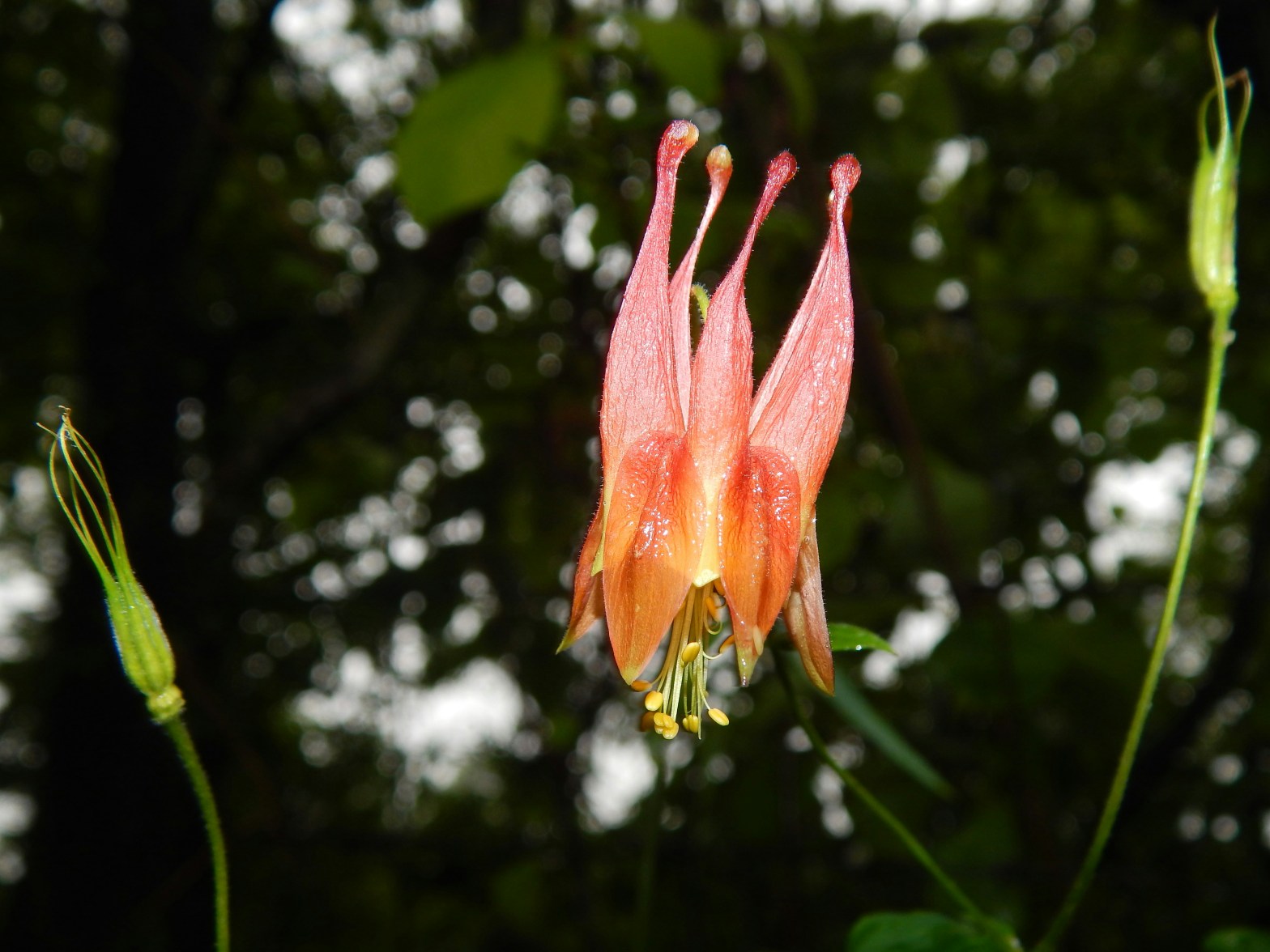
There is one plant I’ve fallen in love with, in part because it reminds me of Jesus’s sower, tossing seeds recklessly and joyously onto all kinds of soil. The Eastern Red Columbine, one of the flowers I have tattooed on my arm, is the only columbine variety native to Virginia. It is a perennial beloved by bees and hummingbirds, with bright red and yellow flowers that hang upside down like bells. When the bees and birds and butterflies have done their work, and the flowers transform into seedheads, the bells invert themselves to become almost vase-like, filled with tiny shiny black seeds. The seedheads stand at the top of tall stalks, and every tiny movement from the wind or passing creatures causes them to rattle and send seeds flying in every direction. When I was weeding a section of my garden yesterday, every move I made disturbed the prodigal seedheads and I had columbine seeds in my hair and in my shoes by the end. I feel sure that my patch of columbines will have doubled in size and density by next spring. This is advantageous to their survival, of course, or they wouldn’t do it. The Eastern Red Columbine produces so many seeds and spreads them so readily because it increases the likelihood that their offspring will make it to the ground, to good soil, and grow. Even the seeds that don’t make it there at first may be picked up by ants or birds and find themselves someplace new. The seeds are very strong, requiring the freezing temperatures of winter to trigger their germination in spring. A sower might spread Eastern Red Columbine seeds in spring and be disappointed to find none sprouting, only to see their bright red and yellow blooms appearing the following year, long forgotten.
The inefficiency, the chaos of the sower is not an accident. If, as Matthew tells us, Jesus intended us to understand the seeds as the word of the kingdom, the Gospel, and the various soils and surfaces are the people who receive it, then we have before us the story of a preacher who preaches to everyone who will listen. Maybe, like the sower sending seed onto the untilled path, the preacher even preaches to those who will not listen, just in case someone hungry for Good News might overhear. There is no concern for waste, or suggestion of scarcity. The sower’s seed supply may be limited, but the Word of the Kingdom is not. Sharing the good news of God’s love is never wasted, because love cannot be wasted. God has assured us of that in Jesus. Even on the cross, Jesus called for forgiveness for his accusers, and came back from death to show us he meant it. Jesus loved Judas even knowing of his betrayal, and did not count that love as waste. Jesus loved Peter, and gave him three opportunities to say it back, undoing the three denials that Peter uttered against him. Three opportunities, because love is not scarce, a commodity to be hoarded or used sparingly. From the moment God created us, God has been sowing love for us with the foolish generosity of a chaos gardener, without a worry whether the seeds would sprout or be gobbled up. We know from the miracles of Jesus that God loves to feed us, so why wouldn’t God sow love that could fill us up? Why wouldn’t God sow love that could sustain us, give us daily bread, even if the fruit takes years to be born?
It can be tempting to focus on ourselves as the soil. We might worry that we have no depth, that we might wither away when things heat up. We might be overwhelmed by the thorny cares of the world and allow the sprout of our faith to be choked out by despair. We might be, or desperately try to be, the good soil, bearing good fruit for God to feed the world with. They are fair concerns, and worth reflecting on. But we have been commissioned by Christ to share the Good News, to spread the word of God’s love and saving grace, to bear witness to what God has done in our lives. We have received the word and have been sent out into the field to spread it. In this day and age when faith is challenged daily and fewer and fewer children grow up with the stories of Jesus, we are the sowers. We are the ones carrying the seed of the word, the Gospel truth that death has been defeated and sin cannot hold us. We are the ones who carry the hope that will feed the world. We can hold onto it, hoard it for ourselves, only share it with those we deem worthy, good soil. But that is not the example we have before us. That is not the way of the Eastern Red Columbine, or in fact any wild plant that sends its seeds out into the world with reckless abandon, trusting that their Creator will provide the growth. Our God is a chaos gardener, generous to the point of foolishness, casting love in mighty fistfuls in every direction in the sure and certain hope that some of it will land in broken hearts and empty stomachs, bringing healing beyond comprehension. So we need not be stingy with love, because God never has been. We need only to embrace the chaos of God’s garden, and love what grows.
 Mother A Writes