Matthew 13:24-30,36-43
In the television show Call the Midwife, a group of Anglican nuns works beside secular nurse-midwives to provide maternal healthcare to a crowded and impoverished neighborhood in East London. Based on a real convent with real nuns who did this crucial work, the show is punctuated with scenes from the daily life of vowed monastics. Like many modern convents, one important part of the work of this group of monastics was to support and care for aging and ill sisters who had retired from their work as midwives but were still very much a part of the community. The show illustrates this beautifully with both humor and at times harsh realism in the character of Sister Monica Joan, a sister whose age and health have led her to become more and more eccentric. As anyone who has cared for a person experiencing cognitive decline can confirm, they still have their moments of clarity, wisdom, and heartwrenching honesty. Sister Monica Joan is no exception, and over the course of the show she offers pearls of wisdom and revelations of divine encounter to the other midwives.
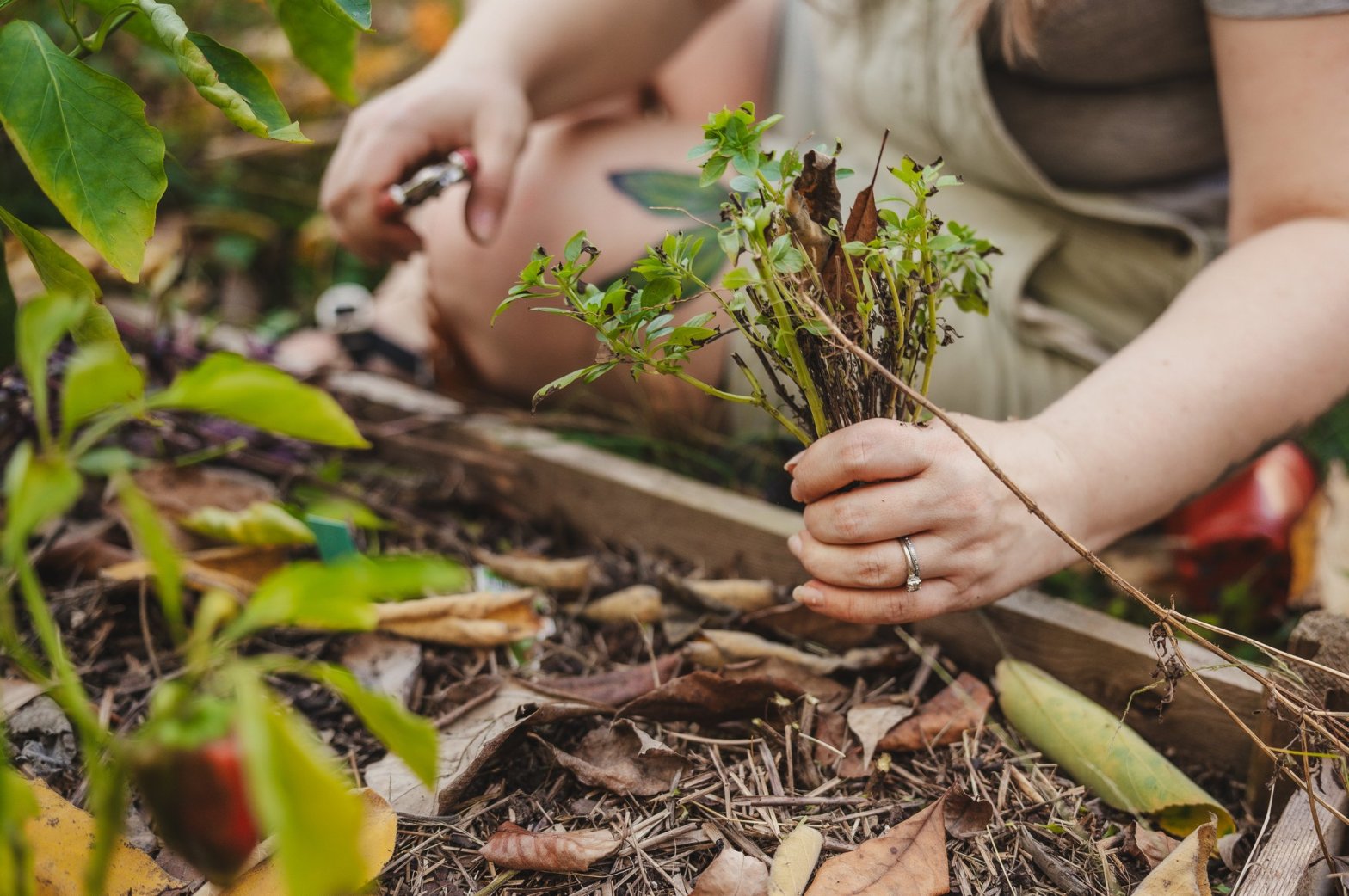
The convent’s handyman, Fred, works very hard in the garden to ensure the sisters are provided for with fresh fruits and vegetables. He spends hours sowing seeds and pulling up weeds. But Sister Monica Joan, in her wisdom, tells one of the young midwives that a weed is simply a flower that someone has decided does not belong. Poor Fred comes back from an errand to find all the weeds have been lovingly returned to the soil from whence they came, with a beaming Sister Monica Joan tucking the last one into a flower box that is supposed to be supplying the convent with vegetables. Fred shakes his head, heaves a sigh, and moves on, accepting yet another moment of eccentricity from the elder nun. For the rest of the growing season, he waters Sister Monica Joan’s weedy flowers alongside the tomatoes and herbs, and the convent kitchen does not seem to suffer too greatly. Occasionally, some of Sister Monica Joan’s misplaced flowers find their way into vases on the dinner table, like the violets and dandelions that children so often gather and present triumphantly to their mothers. Children do not know the difference between a prized flower and an undesirable weed. I think Sister Monica Joan would argue that most adults don’t either.
In his parable of the wheat and the weeds, or the wheat and the tares as it is often remembered, Jesus compares the kingdom of heaven with a field of good grain that has been infiltrated by weeds. The plant most often attributed as the weed in this parable is darnel, a kind of copycat grain that imitates wheat but is not entirely safe for human consumption. The farmworkers are, like Fred the handyman, distressed to see this intruder mixed in with the plants they had planted from seed. They offer to gather the weeds, but the wise householder cautions them that doing so would damage the roots of the newly sprouted wheat, ruining the entire crop. Instead, he tells the farmworkers to let them grow together, the wheat and the lookalike, tending and irrigating both at the same time until the harvest. At that time, the reapers will come, and they will separate the weeds from the wheat, using one as the fuel to transform the other into bread for the household and surrounding community.
Botanists tell us that it is nearly impossible to distinguish between true wheat and darnel during their early stages. The plants are the same color, grow to the same height and at the same or similar rate, and their leaves are identical. It is only when they reach maturity, when their seed heads are formed, that one can clearly identify which is wheat and which is darnel. The reapers in the parable will know which are destined for the fire and which for the barn by the fruit they bear. The fruit of the wheat sustains life for the people who have planted, tended, harvested, and processed it. The fruit of the darnel serves to sustain itself, making more darnel, inedible and even poisonous to most living things.
Jesus tells us that the field is the world, and the sower of good seed is the Son of Man. The children of the kingdom of heaven are good seed, and the weeds are the children of the evil one. The devil sows the darnel amidst the wheat, and the angels reap the harvest, carrying the fruitful righteous into the kingdom and casting the self-serving darnel into the fire. Jesus, who so rarely spells it out this plainly, gives this explanation to his disciples for a reason, but perhaps not for the reason we might think.
I think it is fair to say that the disciples assume themselves to be the good seed, the wheat that bears grain and shines like the sun in heaven. Jesus clarifies for them that he is the sower, and it feels pretty obvious who the enemy is. But as servants of the Lord, as disciples of Jesus, are they not more like the farmworkers who come to the householder with their concerns about the weeds growing up in his field? Are they not the ones who ask the age-old question of God – God, are you not good? Why then, is there so much bad in this world?
The farmworkers in the parable could not identify which plants were which, as they were impossible to tell apart. Yet, they were prepared to pull up every last sprout for the sake of restoring the orderly rows of the field. They very easily could have pulled up all the wheat and left all the darnel, and no one would know for sure until the harvest came, and by then it would be much too late and the consequences would be grave.
I have to admit, that sounds familiar. The number of conversations I have in a week in which someone proclaims that the world is falling apart and we should scrap it all and start over again used to shock me, but it doesn’t anymore. The temptation to despair, to see only the weeds and give in to the desire to rip everything growing from the ground, is strong and persistent. The evil one knows what he’s doing. Humanity has this bad habit of seeing the disorder and imperfection of the world or of our own lives or maybe within our church and becoming so desperate to remedy it that we make it impossible for anything new to grow at all. We struggle with the patience it takes to reach harvest time, to see what fruit will come of the seeds we have planted. And we forget, I think, that the darnel itself is not intending anyone any harm. It is simply a plant, growing where someone decided it does not belong. It is not for us to decide what belongs and what does not, which fruits are worthy of the kingdom and which will feed the cooking fire. The one who owns the field, the one who created the kingdom of heaven and the wheat and the farmworkers and the reapers, is the one who knows the difference between the wheat and the tares, because he breathed life into both.
The farmworkers in the parable are told not to try and gather up what they identify as weeds. Instead, they are to water the earth and protect the field from pests and tend the soil around all of the plants, trusting that when the time comes, the wheat will fill the granary and feed them through the winter, and the tares will fuel the fire that warms their homes and cooks their food. The discernment of what belongs and what does not, of who belongs and who does not, is left to God and the angels who do God’s will. The kingdom of heaven may be compared with this; God alone decides. Our limited knowledge, our prejudices and our grudges and our jealousies, our discomfort with difference and our ignorance of the other; none of it will determine what is acceptable to God. What may look to us like a weedy aberration may very well end up at the center of God’s heavenly banquet, its beauty no longer obscured by our assumptions or our misunderstanding. The dandelions and the violets, the wheat and maybe even the tares, might end up shining like the sun in the kingdom of heaven. For now, we have a field to maintain. Will we have the patience to see what might grow?
 Mother A Writes